Book Appointment Now

Navigating interview sessions
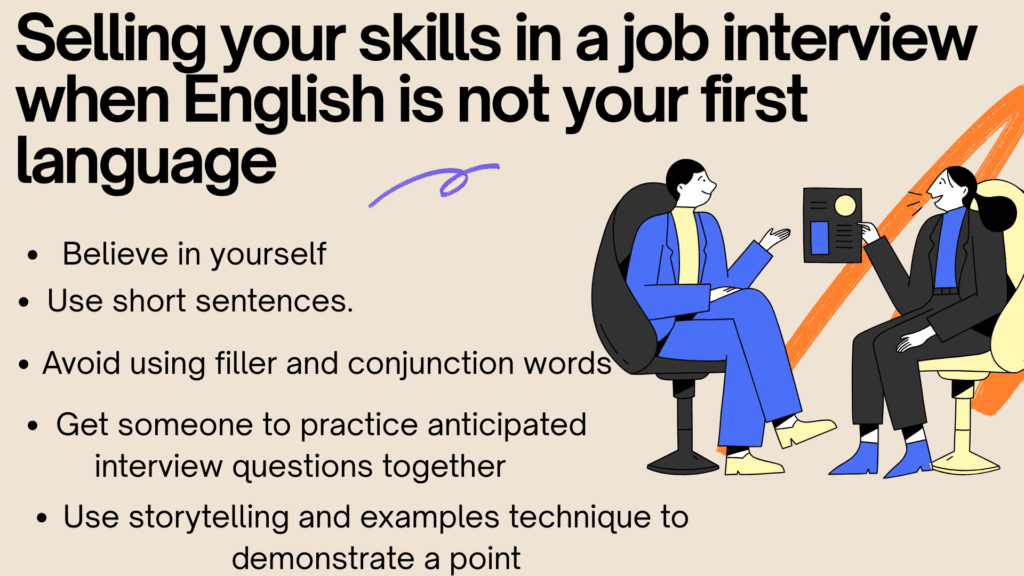
Selling your skills in a job interview when the official language is not your first language
I never knew that I spoke English with an accent until I migrated to Australia where I realized that the way I speak in English was different from the way other Australians speak.
This dawned on me one day in class when I was studying certificate III in Aged Care. It was during a lesson. The asked me a question around duty of care to which I nodded my head smiling wryly. Noticing my ignorance, she asked if I understood what she said. I asked her to write the question on the board in which she asked, “what was that?” throwing me into more confusion. With time I realized that both the teacher and I spoke in own accents that at times show in how we pronounce words. With time however, the teacher got used to my accent and I got used to hers. We communicated and understood each when we speak.
Australians whose English is their first language speak English differently from those of us whose English is not our first language. Don’t get me wrong, it is not that Australian English is any different from the English that I speak, it is about the accents. Native Australian whose English is their first language speak in a different accent to those of us whose English is not our first language. And so it is all over the world.
While I am proud of my own accent because it is part of my rich heritage, culture and make who I am, at times, I sometimes get lost in English conversations especially when interacting with people whom I am not used to the way and they are not to the ways I speak.
Here is the thing, research indicate that children and young people can easily learn and take up another language, but it is a bit difficult for older people. This is because, as we have been speaking in our own languages over the years, our vocal cords, mouth, lips and even our tongue is used to making certain sounds and speaking in certain ways. Therefore, as we speak another language like English, we are most likely to come across sounds and words that don’t exist in our own native languages. The new words or language we encounter in new environment might become difficult for us to pronounce, or we may pronounce them differently from the native speakers of that language. When this happens, some people may feel inadequate or lack confidence in public speaking.
Here is the good part, we don’t need to speak perfectly in any language for us to be able to communicate what we want. We only need to speak in a clear and understandable manner, having non-native accent to any country in the world is okay. And feeling inadequate or lacking confidence in public speaking due to difference in speech should not hold you down.
How then can we sell our skills when the native language is not our first language?
In this article, I will explore selling you skills in an interview when English is not your first language.
As discussed above, job interview candidates, whose English is not their first language may develop a feeling of inadequacy during interviews. This may add to the already stressful interview preparations.
The following strategies can be helpful when you are faced with self-doubt in expressing yourself in English
- Believe in yourself. Having an accent is okay, everyone speaks with an accent. You do not need to speak perfect English for you to communicate. Just express yourself clearly and understandably.
- Use short sentences. Speaking in short sentence are generally easy to understand, easy to translate. Short sentences can help improve clarity and make words easy for the interviewers to comprehend.
- Avoid using filler and conjunction words such as “um,” “hu,” “and” “so” it makes you sound unprepared, not confident and less professional. Instead, when you feel you like are running out of words to express or describe a situation, pause. A moment of a short pause can give an opportunity to gather your thoughts and express yourself in a way that makes you appear confident. If you seem not to find some words, take a short breath. It can help you gather your thoughts.
- Get someone to practice anticipated interview questions together. If you can’t find anyone, practice in front of a mirror. What is even better, record yourself practicing the interview questions and play it back. Check where you have used the fillers and avoid them.
- Use storytelling and examples technique to demonstrate a point. Using example to demonstrate how you handled a certain situation or handled a project, can help the interviewer paint a picture of how you completed a task and achieved a given goal. Using a story during interview to demonstrate a given point, can not only help you express yourself, it also helps make your answer engaging, relatable and memorable.
So, if you have an upcoming interview, I hope you will find these strategies helpful.
Good luck